ADU utility planning Los Angeles
Electrical, Sewer, Water, and HVAC Questions for ADUs
A practical guide to ADU utility planning for Los Angeles and San Fernando Valley homeowners, including electrical, sewer, water, HVAC, drawings, permits, and inspections.
Utility planning should start before the floor plan hardens
ADU utility planning in Los Angeles should start while the homeowner is still comparing layouts, not after the kitchen and bathroom have been drawn as if the property were empty. The main electrical panel, water service, sewer line, cleanouts, gas meter, drainage, hardscape, side-yard access, and likely equipment locations can all affect where the unit should sit and how the interior should work. This is true for detached ADUs, garage conversions, junior ADUs, and additions. A clean floor plan can become expensive or awkward if it ignores the route that power, water, sewer, ventilation, and mechanical systems need to take through the property. That early review does not need to answer every hidden condition. It should show which utility questions are visible now, which ones need field verification, and which decisions should stay flexible until the property has been reviewed.
Electrical review is more than checking for an outlet
Electrical planning should look at the existing panel, likely loads, subpanel location, conduit path, meter location, appliance choices, exterior lighting, smoke and carbon monoxide alarms, and how inspectors will review the rough work before walls close. A detached ADU may need a longer route from the main house to the backyard. A garage conversion may have existing wiring that still needs to be reviewed against the new living-space use. Homeowners do not need to solve these questions alone, but they should expect their contractor to name them before pricing, drawings, and finish selections move too far. This is where a vague answer can become a real construction problem. If the electrical path is not discussed early, the homeowner may choose a layout, appliance package, or equipment location that has to be changed later.
Sewer, water, and rough plumbing can drive the layout
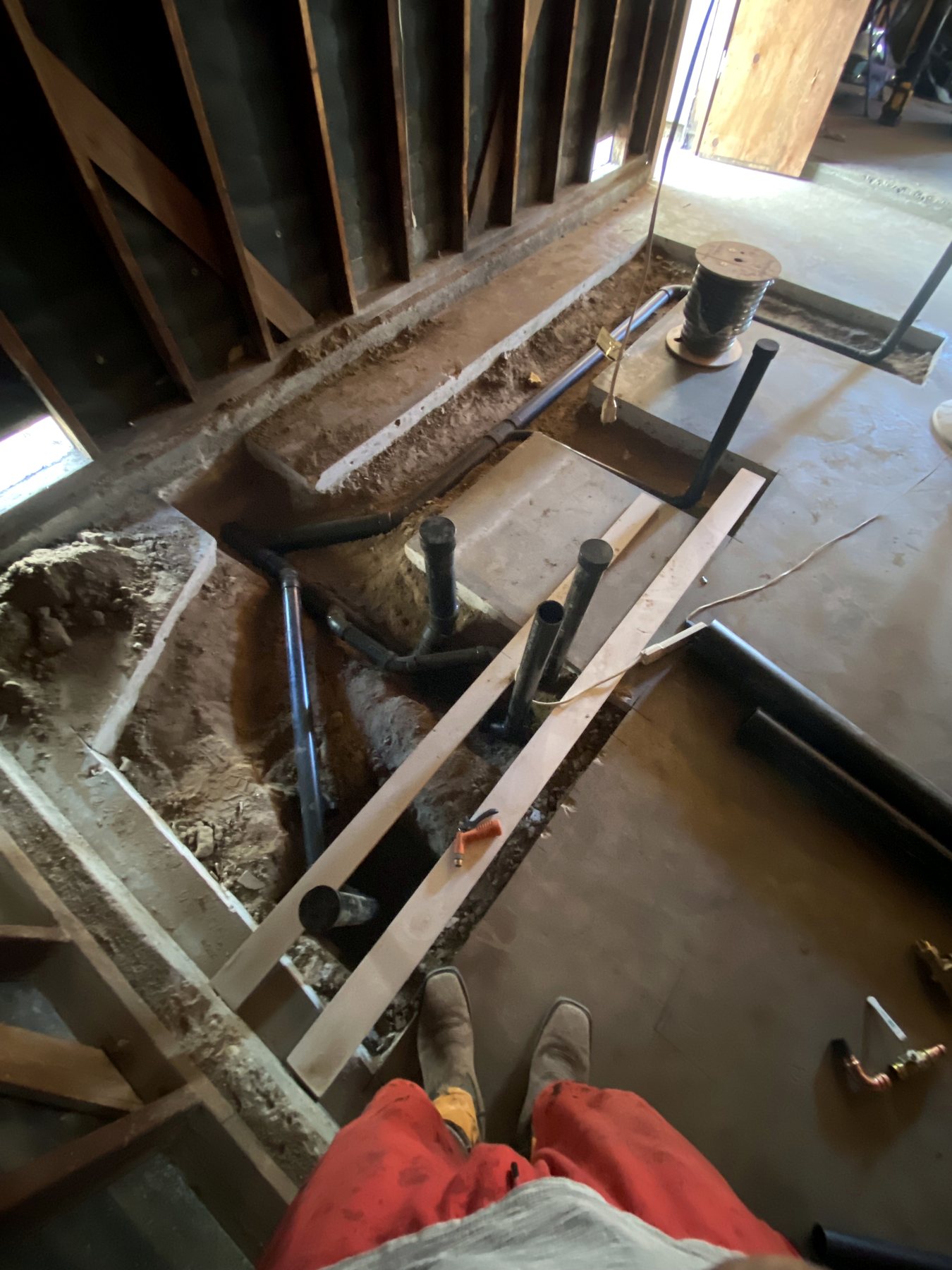
The kitchen and bathroom are usually the rooms that expose weak utility planning first. Sewer slope, water line routing, venting, cleanout access, slab cuts, trenching, wall openings, fixture clearances, drainage, and inspection sequence can all shape where plumbing fixtures belong. BBC ADU holds a plumbing license in addition to the general builder license, so rough plumbing and utility tie-ins can be part of the early ADU conversation rather than a late handoff. That matters because a bathroom location that looks good on paper may not be the smartest location once the sewer path, slab condition, and cleanout access are reviewed. Good plumbing planning also protects usable space. A small ADU does not have room for awkward fixture placement, poor access panels, or utility routes that make cabinets, doors, and storage harder to use.
HVAC, ventilation, and equipment access need room
Heating and cooling for an ADU should fit the small home without crowding the plan or creating service problems later. The project should account for equipment location, clearances, condensate routing, ventilation, bathroom exhaust, kitchen exhaust, exterior noise, maintenance access, and how the system will be inspected. A compact ADU can feel uncomfortable if HVAC is treated as an afterthought, and a clean layout can lose usable space if mechanical equipment has no planned home. The better approach is to discuss comfort, equipment, and service access while the plan is still flexible. Comfort belongs in the construction conversation. The homeowner should understand how the ADU will be heated, cooled, ventilated, and serviced before finish work makes those choices harder to adjust.
Keep utilities connected to drawings, permits, and inspections
Utility planning should stay connected to the drawings, permit coordination, construction sequence, inspections, and finish work. The plan set should reflect how power, sewer, water, drainage, ventilation, and mechanical systems will be routed on the actual property. The construction schedule should leave room for rough inspections before insulation, drywall, cabinets, tile, and trim close up the work. BBC ADU helps Los Angeles and San Fernando Valley homeowners keep those utility questions visible from the site walk through the turnkey ADU process, so the finished unit is built around real site conditions instead of assumptions. The goal is a plan that can be built, inspected, and maintained. When utilities stay visible, the homeowner can compare ADU options with fewer surprises and a clearer sense of what the work requires.
Related ADU pages
Talk through your ADU idea
BBC ADU can review your property, intended use, and build goals as you choose the right direction.
Request an ADU Estimate